- honey
- food-science
- crystallization
- honey-fraud
Why Honey Crystallizes
Crystallized honey hasn't gone bad. The chemistry behind it is actually proof that your honey is real.
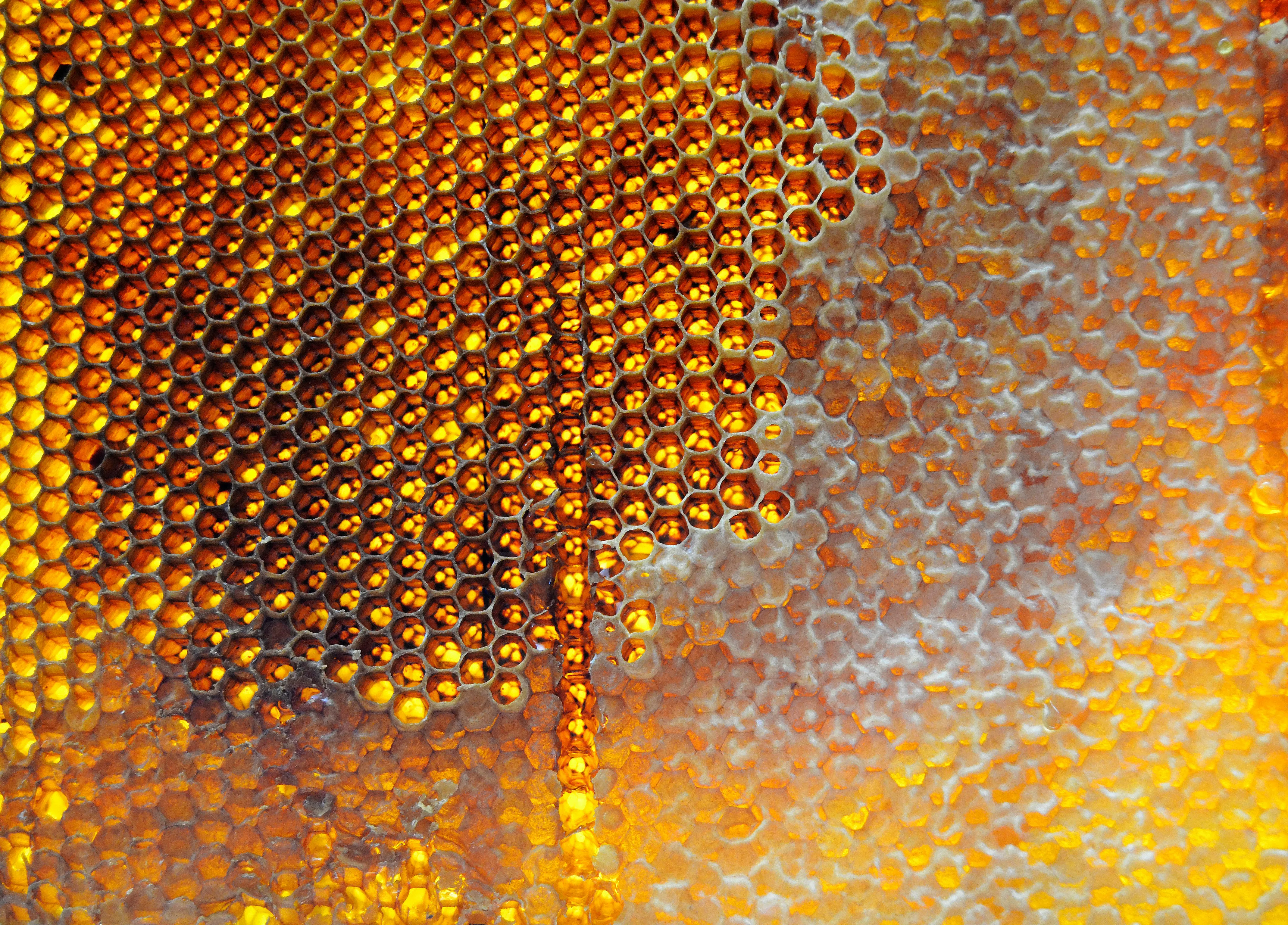
There is a jar of honey in the back of nearly every kitchen cabinet in America. At some point, someone opened it, noticed it had turned thick and grainy, and pushed it behind the peanut butter. They assumed it had gone bad.
It has not gone bad. It is doing exactly what real honey does.
Crystallization is one of the most misunderstood things about honey, and the misunderstanding has been quietly useful for companies selling product that barely qualifies as honey at all. So it is worth understanding what is actually happening in that jar — because the chemistry tells you more about where your honey came from than the label does.
A Supersaturated Solution
Honey is, at its core, a sugar solution. About 80 percent sugar by weight, roughly 17 percent water, and a small but meaningful fraction of enzymes, organic acids, pollen, minerals, and aromatic compounds that give each honey its particular character. The two dominant sugars are glucose and fructose, and their ratio determines much of how a given honey behaves.
Here is the key fact: honey contains more sugar than the water in it can naturally hold in solution. Chemists call this a supersaturated solution. It is thermodynamically unstable — meaning the sugar wants to come out. Given enough time and the right conditions, the glucose molecules will begin to arrange themselves into crystals, pulling away from the liquid and forming the grainy texture that so many people mistake for spoilage.
This is not degradation. It is physics. The honey is simply reaching a more stable state.
Fructose, the other major sugar, is more soluble in water and stays dissolved. So what you end up with is a two-phase system: solid glucose crystals suspended in a fructose-rich liquid. The crystals are what give crystallized honey that opaque, lighter appearance and that thick, spreadable texture. The honey itself — its flavor, its nutritional content, its antimicrobial properties — remains unchanged.
Why Some Honeys Crystallize Faster Than Others
Not all honey crystallizes at the same rate, and the reason comes down to that glucose-to-fructose ratio.
Honeys with a higher proportion of glucose crystallize quickly. Clover honey, one of the most common varietals in the United States, is a classic fast crystallizer — it can go grainy within weeks of extraction. Canola honey is even faster, sometimes crystallizing within days. Dandelion, alfalfa, and cotton honey are all on the quicker end.
Honeys with more fructose relative to glucose stay liquid much longer. Acacia honey is the standard example — it can remain pourable for years. Tupelo honey from the Gulf Coast is famous for its resistance to crystallization, a trait that makes it particularly prized and frequently counterfeited.
Our tulip poplar honey falls on the slow end of the spectrum. The fructose-to-glucose ratio and the elevated maltose content keep it liquid for months after extraction. If you have a jar of our late spring honey from last season and it is still pourable, that is the poplar talking. It is not because we did anything special to it. It is the chemistry of what the bees collected from those hundred-foot trees outside Leesburg.
Temperature and the Crystal Sweet Spot
The glucose-to-fructose ratio sets the tendency, but temperature determines the speed.
Crystallization happens fastest at around 57 degrees Fahrenheit — roughly 14 degrees Celsius. At that temperature, the conditions for crystal nucleation and growth are ideal. Warmer than that and the sugar stays in solution more readily. Colder than that and the honey becomes too viscous for the glucose molecules to move and organize.
This means your kitchen pantry, which probably sits somewhere between 65 and 75 degrees, will produce slower crystallization than an unheated garage or basement through a Virginia winter. If you have noticed that your honey crystallizes faster in the cold months, this is why. The temperature in many homes drops just enough — especially near exterior walls or in back cabinets — to enter that crystallization window.
It also means that the advice to store honey in the refrigerator is exactly wrong if you want to keep it liquid. A fridge hovers around 37 degrees Fahrenheit, which is below the fastest crystallization range but still cold enough to accelerate it compared to a warm kitchen shelf.
Nucleation Sites — The Seeds of Crystals
For crystallization to begin, the glucose molecules need something to build on — a surface where the first tiny crystal can form and grow. Chemists call these nucleation sites.
In raw, unfiltered honey, nucleation sites are everywhere. Pollen grains. Microscopic wax particles. Bits of propolis. Air bubbles from the extraction process. Each one acts as a seed, a tiny platform where glucose molecules can start arranging into crystalline structure.
The Ultra-Filtering Problem
Most honey on grocery store shelves in the United States has been ultra-filtered. This is not the same as the coarse straining that beekeepers do to remove large wax fragments. Ultra-filtering involves heating the honey, thinning it with water, and forcing it through diatomaceous earth or ceramic filters at high pressure. The result is a perfectly clear, golden liquid with an indefinite shelf life.
It also has no pollen in it.
This matters for two reasons. First, the removal of pollen eliminates all nucleation sites, which is why ultra-filtered honey stays liquid on the shelf for months or years. For retailers, this is a feature — consumers have been conditioned to see crystallization as a defect, so a honey that never crystallizes never gets returned.
Second — and this is the part that should concern anyone who cares about what they eat — pollen is the only reliable way to trace honey back to its botanical and geographic origin. Remove the pollen, and there is no way to determine where the honey actually came from or what the bees were foraging on. A jar labeled “Product of USA” could contain honey from anywhere on the planet, and without pollen, no laboratory test can prove otherwise.
This is not theoretical. In 2011, Food Safety News tested more than sixty samples of honey from grocery stores and drugstores across the United States. Over seventy-five percent contained no pollen at all.1 A follow-up investigation by the same outlet found Chinese-origin honey — subject to US anti-dumping tariffs since 2001 — being laundered through third countries, ultra-filtered to remove the telltale pollen, and sold to American consumers with no indication of its true origin.2
The scale of global honey fraud is staggering. The European Commission found that 46 percent of honey samples tested in a 2023 investigation were suspected of adulteration — blended with cheap sugar syrups made from rice, corn, or sugar beets.3 These syrups can be engineered to pass standard sugar-profile tests, making detection difficult without advanced isotope analysis.
So when you pick up a plastic bear of honey at the grocery store and it is perfectly clear, perfectly golden, and has been sitting on the shelf for a year without a single crystal forming — that is not freshness. That is evidence that something was removed.
Crystallization as Proof of Authenticity
Crystallization is not a sign that something has gone wrong. It is a sign that nothing was taken out.
If your honey crystallizes, it means the pollen is still there. The wax traces are still there. The natural nucleation sites that raw honey always contains are still there. No one heated it to 160 degrees, diluted it, and pushed it through industrial filters to make it shelf-stable and untraceable.
We strain our honey through a coarse mesh after extraction — enough to catch wax cappings and the occasional bee wing, not enough to remove pollen or the fine particles that give the honey its body and its terroir. That is it. No heating, no pasteurizing, no ultra-filtering, no blending. When it crystallizes, we consider it a good sign.
This does not mean that every liquid honey is fraudulent, or that every crystallized honey is pure. Acacia and tupelo are naturally slow to crystallize even in raw form. And crystallization can be induced in adulterated honey through seeding. But as a general indicator — especially for common varietals like clover, wildflower, and most mixed-source honeys — crystallization is a quiet vote of confidence.
What to Do With Crystallized Honey
You have two options, and both are good.
Eat it as it is. Crystallized honey spreads like soft butter. It stays on toast instead of running off the edges. It holds its shape on a cheese board. Some people — ourselves included — prefer the texture. In parts of Europe, creamed honey (which is intentionally crystallized under controlled conditions to produce a smooth, fine-grained texture) is the standard. Liquid honey is the oddity there, not the other way around.
Warm it gently. If you want it liquid again, place the jar in a bowl of warm water — not hot, not boiling. Keep the temperature under 110 degrees Fahrenheit. At that range, the glucose crystals will dissolve back into solution without damaging the enzymes, aromatics, or other heat-sensitive compounds that make raw honey worth having. A double boiler on the lowest setting works too. It takes patience — twenty to thirty minutes depending on how far the crystallization has progressed — but the honey will return to its liquid state.
What you should never do is microwave it. Microwaves heat unevenly and can create hot spots well above 140 degrees, which degrades the diastase enzymes and breaks down the glucose oxidase responsible for honey’s antimicrobial properties.4 You will also caramelize some of the sugars, which changes the flavor. At that point, you have done to your honey in two minutes what ultra-filtering does in a factory.
The Jar in Your Cabinet
So. That jar you pushed behind the peanut butter.
Take it out. The crystallization you are seeing is glucose doing what glucose does in a supersaturated solution with natural nucleation sites present. It means your honey had pollen in it. It means no one filtered out the parts that make it traceable, identifiable, and real.
Spread it on a piece of sourdough. It will be thick and pale and grainy and — if it came from a good source — it will taste exactly the way it tasted the day it was extracted. Honey does not spoil under normal conditions. Sealed honey vessels have been found in ancient Egyptian tombs, and the claim that such honey remained edible has been widely repeated — though the primary archaeological evidence is thin and the details are often embellished in retelling.5 What is well established is that honey’s low moisture content and acidity make it remarkably resistant to microbial growth. Yours is fine.
The bees did not make that honey so it could sit perfectly clear and perfectly liquid in a plastic bear on a shelf forever. They made it to feed their colony through winter — a dense, stable food source that they capped in wax and stored at hive temperature. Crystallization is part of the design. We are the ones who decided it was a problem.
It is honey being honey.
References:
- Schneider, A. “Tests Show Most Store Honey Isn’t Honey.” Food Safety News, November 2011
- Schneider, A. “Asian Honey, Banned in Europe, Is Flooding U.S. Grocery Shelves.” Food Safety News, August 2011
- European Commission, Joint Research Centre. “EU Coordinated Action on Honey Authenticity.” 2023
- Turkmen, N. et al. “Effects of prolonged heating on antioxidant activity and colour of honey.” Food Chemistry, 2006
- Crane, E. The World History of Beekeeping and Honey Hunting. Routledge, 1999
We sell what the bees don’t need. Interested in trying some? Drop us a line.