
We Started with Two Hives
and a Lot of Questions
We’re not lifelong beekeepers. We’re not agricultural scientists. We’re two people in Loudoun County — operating as Bluff Works Apiaries — who got curious about honeybees and couldn’t stop learning.
What started as weekend reading turned into hive-building weekends, then installation day, then our first inspection, and then somehow six hives in the backyard.
How We Got Here
Spring 2024
Started with a package and a nuc. Built our first hive bodies, installed the bees, and spent every weekend watching them draw comb and build up stores.
Winter 2024–25
Lost the package colony over winter. The nuc survived — our first lesson in how different two colonies can be.
Spring–Summer 2025
Made two splits from the surviving colony, caught two swarms, and added another package. Ended the year at six hives.
2026 & Beyond
Growing toward twelve hives. First surplus honey harvest. Learning more every season.
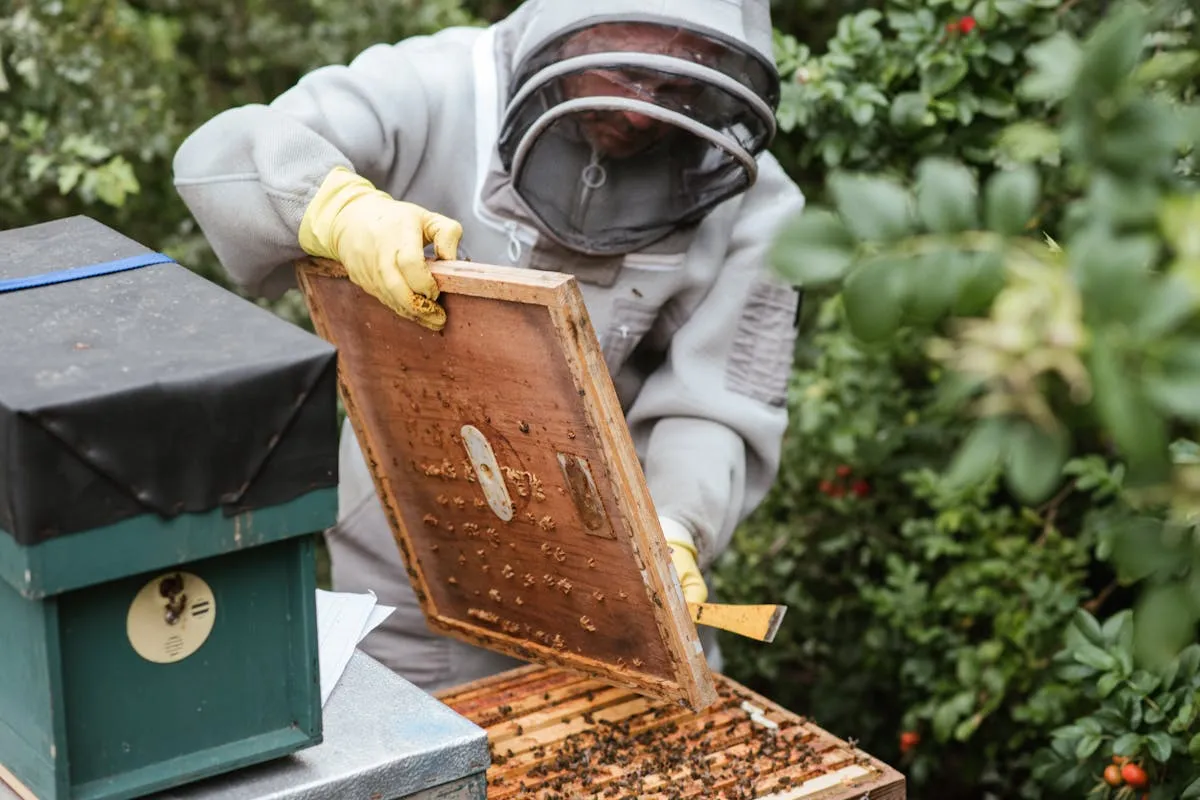
Western Loudoun County
The Land
Our hives sit in a stand of tulip poplars outside Leesburg, where western Loudoun County starts to roll toward the Blue Ridge. The poplars are massive — a hundred feet tall, trunks too wide to wrap your arms around — and the apiary sits underneath them in dappled shade.
Tulip poplar is one of the most important nectar trees in the eastern United States. When the poplars bloom in late spring, the flowers produce nectar so abundantly that beekeepers call it a “nectar flow” — the bees work sunrise to sunset, and you can smell the honey in the air. It gives our honey a distinctive dark amber color and a rich, complex flavor.
Beyond the poplars, our bees forage the apple and cherry orchards that dot the hillsides, clover meadows, wild blackberry thickets, and goldenrod fields that light up gold every fall.
Each season, each bloom, each tree adds something to the honey. Beekeepers call it terroir — the taste of a place. Our honey tastes like the poplar forest of Loudoun County.
The Craft
We inspect every one to two weeks during the active season, keep notes, and try not to overthink it. For mite management we do monthly sugar rolls from April through October and treat with organic acids (oxalic and formic) if counts exceed 3 mites per 100 bees — no synthetic miticides. We don’t force production and we leave 60 to 80 pounds of honey per hive going into winter.
The Loudoun Beekeepers Association has been a huge help. We go to monthly meetings, ask a lot of questions, and try to get a little better at reading the hives every time we open one.
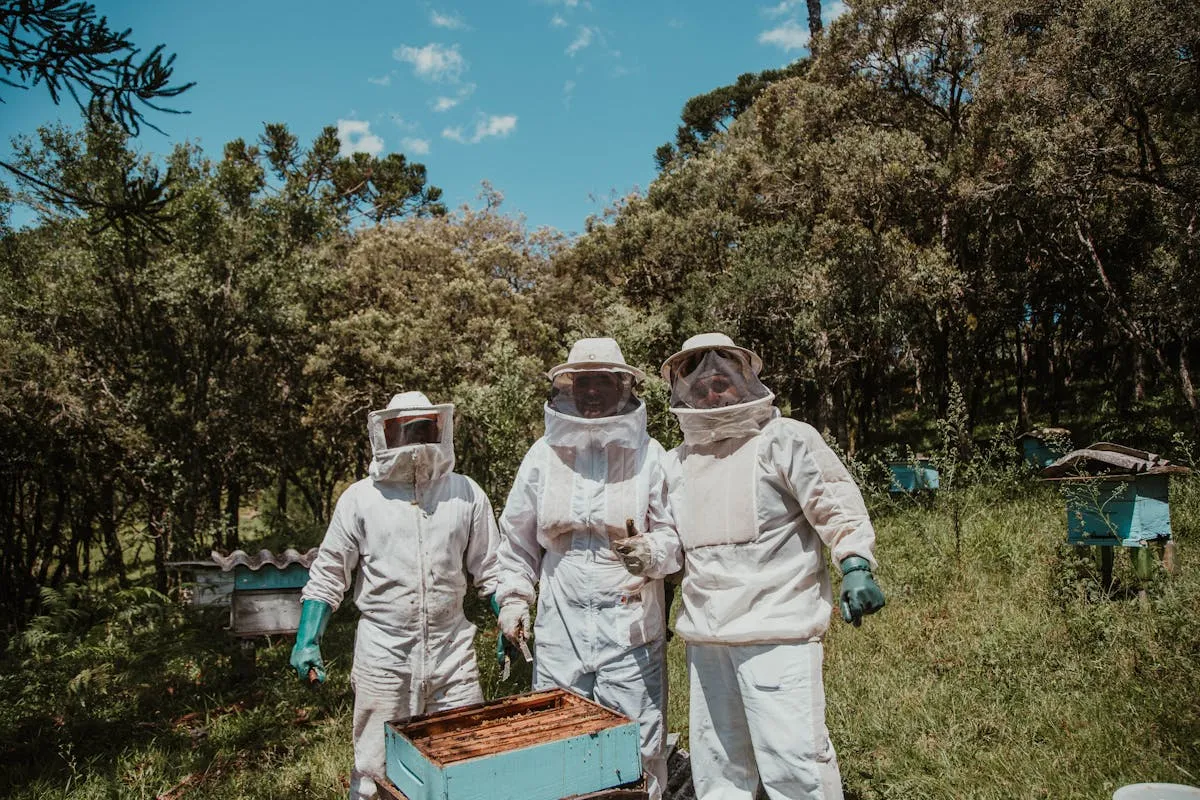
How We Think About It
Local
Our bees forage in a few-mile radius. Our honey comes from those flowers. We sell to people who live here. That’s the whole model.
Writing It Down
We keep this journal because we forget things between seasons. If other people find it useful, even better.
Hands Off When Possible
We inspect every one to two weeks during the active season and pull back to monthly once colonies are established. We watch more than we intervene.
Slow
We started with two colonies in 2024, lost one over winter, and grew to six by the end of 2025. We’ll add more when we’re ready. There’s no rush.
Our Name
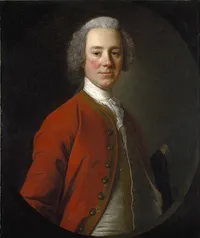
Loudoun County is named after John Campbell, the 4th Earl of Loudoun — a Scottish nobleman who served as Commander-in-Chief of British forces in North America. The county was formed in 1757, and the double-U spelling is a Scottish convention.
Most people spell it “Loudon” without the second U, which is fair — there’s no way to hear the difference. We kept the spelling, because the history is worth keeping.