- pollen
- forage
- observation
- botany
- seasonal
The Color of Pollen
Each pollen load a forager carries is a specific color tied to a specific plant. Watching the landing board is like reading a botanical survey in real time.
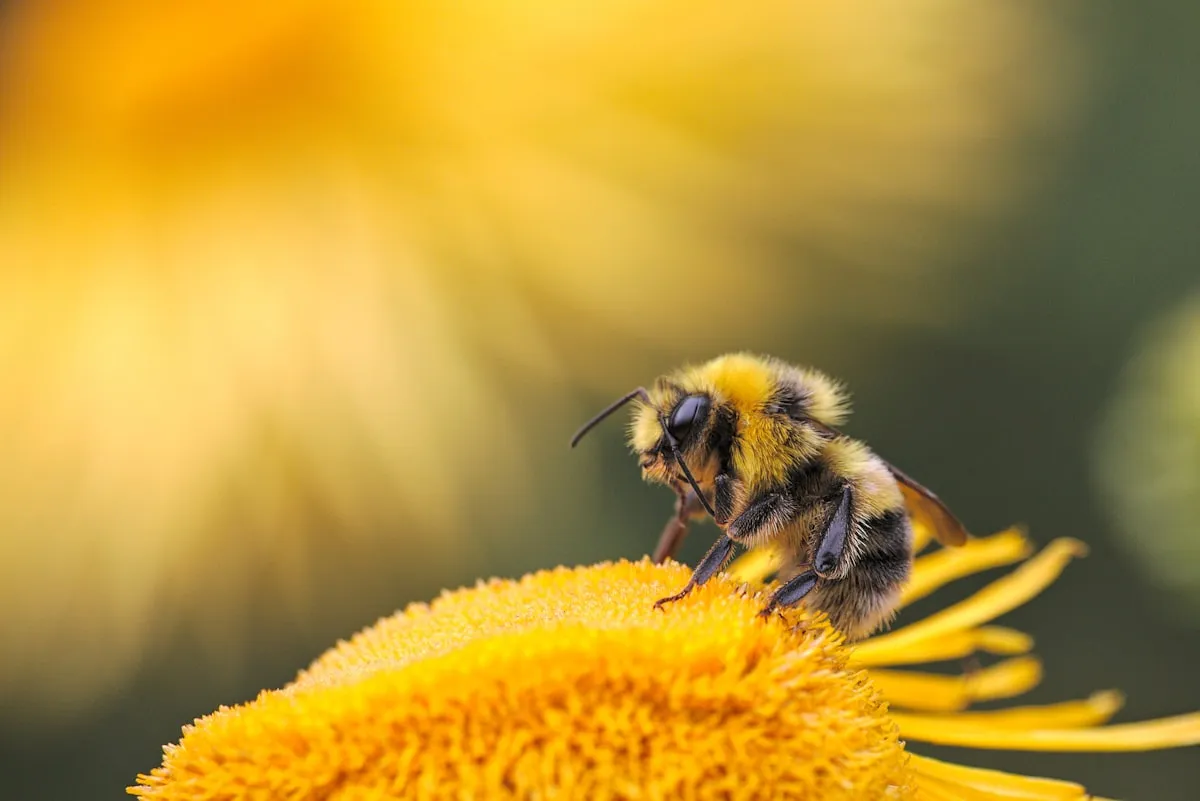
There is a moment on a clear morning in late April — maybe seven-thirty, the air still cool, the dew not yet burned off the clover — when the first foragers of the day begin returning to the hive. They come in low and steady, legs trailing, and if you crouch at the entrance and watch, you will see it: bright orange pellets packed against their hind legs, vivid against the dark fuzz of the body, catching the light like chips of amber.
That orange is dandelion. Taraxacum officinale. The first significant pollen source of spring in Loudoun County, blooming in every lawn, field margin, and roadside ditch from Leesburg to Bluemont. The bees have been waiting for it since February, when they began tentative cleansing flights on warm afternoons but found almost nothing to bring home. Now there is something, and they are bringing it in volume.
We did not know, when we started keeping bees, that pollen has color. Specific color. Not a vague yellowish dust, but distinct, identifiable hues that map directly to the plant species the forager visited. Dandelion is orange. Clover is pale yellow. Tulip poplar is gray-green. Goldenrod is deep gold. Sumac is the color of old brick. Each pellet on a bee’s leg is a botanical label, and the landing board on a busy afternoon is a real-time survey of what is blooming within two to three miles of the hive.
The bees are field botanists. They do not know this, and they do not care. But we have learned to read their notes.
How Pollen Travels
A forager collecting pollen works methodically. She lands on a flower, scrambles across the anthers, and the loose pollen grains stick to the branched hairs that cover her body — a kind of electrostatic velvet that grabs fine particles on contact. As she moves between flowers, she uses her legs to groom the grains from her body hair and pack them into a structure on each hind leg called the corbicula, or pollen basket.
The corbicula is not a basket in any human sense. It is a smooth, concave depression on the outer surface of the tibia, rimmed by long, stiff hairs that curve inward. The bee moistens the pollen with a small amount of nectar, compresses it, and packs it into this space — building the pellet layer by layer, pressing it down, shaping it into a compact, slightly glossy mass. By the time she heads home, she may be carrying pellets the size of a pinhead on each leg, or — from an abundant source — pellets as large as a small lentil, weighing as much as a third of her body weight.
The pellets hold their shape. You can watch a loaded forager land, walk across the landing board, and disappear into the hive, and the color is visible the entire time. At close range — a hand lens helps, though it is not strictly necessary — the pellet has a faint sheen from the nectar binder, and the texture is surprisingly uniform. This is compressed plant material, hundreds of thousands of individual pollen grains from dozens or hundreds of flowers, gathered on a single trip and packed by an insect that weighs less than a tenth of a gram.
The color of the pellet comes from the pollen grain itself. Different plants produce pollen with different pigments — carotenoids, flavonoids, anthocyanins — and those pigments are consistent enough within a species that the color is a reliable identifier. Not precise enough for a peer-reviewed botanical survey, maybe. But precise enough for a beekeeper sitting at the hive entrance with a notebook.
The Color Chart
We have been keeping a rough pollen color log since our first spring in Leesburg. Some of these we learned from books. Most we learned by watching the landing board, then walking the property and the roadsides to see what was blooming, then matching the timing. Over two full seasons, the associations have become reliable enough that we trust them. Not all of them — there are still colors we cannot place. But these are the ones we know.
Bright orange — dandelion (Taraxacum officinale)
The most unmistakable pollen color in our landscape. Almost fluorescent, the kind of orange that draws your eye even from several feet away. Dandelion is one of the earliest and most dependable pollen sources in Loudoun County, blooming heavily from mid-March through May and then sporadically through the rest of the season. The bees work it hard in early spring, when there is little else available and the colony is building up brood to prepare for the major nectar flows. A landing board covered in bright orange pellets in April means the colony is feeding young — which means the queen is laying, which means things are going right.
Pale yellow — white clover (Trifolium repens)
Softer than dandelion, a muted butter-yellow that is easy to overlook if the light is flat. White clover starts blooming in late May here and continues through July, sometimes later if we get rain. It is everywhere — pastures, roadsides, lawns that have not been sprayed. The pale yellow pollen often shows up alongside other colors, because clover blooms overlap with so many other sources. When we see a forager carrying pale yellow pellets and another carrying gray-green ones on the same afternoon, we know the clover and the tulip poplars are both open. That is late May.
Gray-green — tulip poplar (Liriodendron tulipifera)
This is the one we watch for most closely, because the tulip poplar is the backbone of our nectar flow. The pollen color is subtle — a dusty, muted green-gray that does not photograph well and does not announce itself the way dandelion orange does. You have to look for it. But when you see it, you know the poplars have opened their flowers eighty feet up in the canopy, and the nectar is flowing. Gray-green pollen on the landing board in late May is the signal that the most productive weeks of our beekeeping year have begun. We wrote about the tulip poplar flow in detail elsewhere — the sheer volume of nectar, the dark amber honey it produces — but the pollen is the first messenger. It arrives before we can see the flowers or feel the sticky mist of dripping nectar on a still afternoon.
Dark red to rust — sumac (Rhus)
Sumac blooms along every fence line and field edge in Loudoun County in June and July, its conical clusters of small flowers opening from the top down. The pollen is a deep reddish-brown — darker than terra cotta, not quite burgundy. It is not a heavy pollen source the way clover or dandelion is, but it is persistent. We see the rust-colored pellets for weeks, mixed in with whatever else is blooming. Sumac is also a nectar source, though not a major one. The pollen tells us it is there, filling a gap between the tulip poplar flow and the summer dearth.
Light gray — blackberry and raspberry (Rubus)
The Rubus genus blooms along field edges and in disturbed ground from late May through June here. Wild blackberry, especially, is abundant — thickets of it grow along the property line and in the hedgerows between the hayfields east of us. The pollen is a quiet gray, lighter than tulip poplar but with a similar muted quality. We were not confident about this identification for the first year. It took correlating the timing — light gray pellets appearing when the blackberry canes were in full flower, fading when the blooms dropped — to be sure. Both the pollen and the nectar from Rubus contribute to our early summer honey, adding a layer of flavor that is harder to pin down than the poplar but present.
Deep gold — goldenrod (Solidago)
The fall signal. When goldenrod blooms in late August and September, the landing board turns gold — a rich, saturated yellow deeper than clover, almost orange but without the fluorescent brightness of dandelion. Goldenrod pollen is heavy and conspicuous. The bees pack it in tight, fat pellets, and on a warm September afternoon the entrance looks prosperous — bees coming in loaded on both legs, moving with the deliberate weight of a good harvest.
Goldenrod is often blamed for hay fever, but it is insect-pollinated, not wind-pollinated. The actual culprit is ragweed, which blooms at the same time and disperses its pollen on the wind. Goldenrod pollen is sticky and heavy — designed to be carried by bees, not blown by breeze. The bees know the difference. They work goldenrod fields with the intensity they bring to the tulip poplar flow, and the stores they build from it are what carries many colonies through the winter.
The honey from goldenrod is strong — pungent, almost cheesy when freshly gathered, mellowing over time into something rich and complex. We do not extract our goldenrod honey. We leave it for the bees. It is their winter food, and they have earned it.
Cream to white — black locust (Robinia pseudoacacia) and sourwood (Oxydendrum arboreum)
Black locust blooms in mid-May here, just before the tulip poplars reach their peak. The drooping clusters of white flowers are fragrant enough that you can smell them from the road. The pollen is a pale cream, almost white — the lightest color we see on the landing board. Sourwood blooms later, in June and July, and produces a similarly light pollen, though sourwood is less common in our immediate area than it is further south in the Blue Ridge. We group them together because the pollen color is difficult to distinguish between the two, and both are blooming at times when other sources are also active. Identifying the source requires knowing what is in flower nearby, which means walking the landscape.
Seasonal Shifts
If you watched our landing board every day from March through October and logged the pollen colors, you would have a calendar. Not a calendar of human dates but a calendar of blooms — what opened when, how long it lasted, what replaced it. The pollen palette shifts through the year with a rhythm that repeats, roughly, from one season to the next, though the exact timing drifts by a week or two depending on temperatures and rainfall.
March brings the first scattered orange — dandelion, red maple, a few early wildflowers. The loads are small and the foraging is tentative. The bees fly only on the warmest afternoons, and the landing board is quiet more often than it is busy. We are watching for signs of life more than abundance.
April changes everything. The orange intensifies as the dandelions peak. Pale yellows appear — clover, mustard, some orchard trees. The foragers are flying earlier in the morning and returning later. The colony is expanding, the queen is laying heavily, and the pollen income is feeding that growth. A colony that is not bringing in pollen in April is a colony that needs attention.
May is the richest month. Gray-green tulip poplar pollen appears alongside cream-colored locust, pale clover yellow, and the quiet gray of blackberry. On a good afternoon, we can count four or five different pollen colors on the landing board at the same time. This is the peak of the nectar flow, and the pollen diversity reflects the landscape at its most generous. Everything is blooming, and the bees are working all of it.
June and July bring a gradual narrowing. The tulip poplars finish. The clover thins if it gets hot and dry. Rust-colored sumac pollen appears. The gray of Rubus fades. The diversity of colors on the landing board decreases, and by late July, during the worst of the summer dearth, we sometimes see foragers returning with almost nothing. The palette goes from five colors to two, then to one, then to near-silence. This is the hardest part of the season for the bees. They are not starving — they have stores — but the income has stopped.
Late August brings the gold. Goldenrod opens, and the landing board lights up again with those deep yellow pellets. Aster species add purple and lavender-tinted loads. The bees seem to work with renewed urgency — not urgency in the human sense of anxiety, but in the straightforward sense that there is food again and winter is coming. The foraging window is narrower now, the days shorter. They pack in what they can.
By October, the pollen is nearly gone. A few late asters, some scattered goldenrod. The landing board is quiet in the mornings and sees only brief activity on warm afternoons. The season is closing. What the bees have stored is what they will have until March.
What Pollen Tells You About the Queen
There is a diagnostic shortcut embedded in pollen observation that took us a while to learn, though it is obvious once you hear it.
Bees collect pollen to feed brood. Pollen is protein — it is the raw material nurse bees use to produce royal jelly and brood food. An adult bee can survive on honey alone. But larvae need pollen-derived protein to develop, which means pollen collection is directly linked to brood rearing, which is directly linked to the queen.
If your bees are bringing in pollen, the queen is almost certainly laying. A colony with a failed queen — or a colony that has gone queenless — will eventually slow and then stop collecting pollen, because there is no brood to feed. The house bees are not requesting it. The feedback loop breaks. A landing board with heavy pollen traffic in April or May is a landing board telling you the queen is present and productive, without you ever opening the hive.
The reverse is also worth watching. A colony that was bringing in pollen steadily and then stops — not because the bloom has ended but while other hives in the same yard are still active — may have lost its queen. We have caught two queen problems this way, both times noticing that one hive had conspicuously less pollen traffic than its neighbors on the same afternoon. Both times, an inspection confirmed the suspicion. In one case, the queen had stopped laying. In the other, the colony had begun raising emergency queen cells.
This is not a perfect diagnostic. A colony might slow pollen collection because the bloom it was working has ended, or because its brood nest is already fully provisioned. But the comparison — watching all six hives on the same day and noting which ones are bringing in less — adds a data point that costs nothing more than ten minutes of attention.
Mono-Color and Multi-Color
One of the more interesting things pollen colors tell you has nothing to do with the bees and everything to do with the landscape.
A landing board showing three or four different pollen colors on a single afternoon means the bees are working a diverse landscape — multiple plant species in bloom, scattered across their foraging range. This is the condition we see in May and early June, when our bees can reach tulip poplars, clover, blackberry, locust, and a dozen wildflowers all within a two-mile radius. The diversity of the pollen palette reflects the diversity of the habitat. It is a kind of ecological report, delivered on the legs of insects.
A landing board showing a single pollen color — a mono-color day — means one source is dominant and everything else is either out of bloom or too sparse to attract foragers. We see this in April, when dandelion orange overwhelms the board, and again in September, when goldenrod gold is all there is. In both cases, the single color reflects a real condition in the landscape: one plant has flooded the floral market, and the bees have concentrated their effort on it.
Neither pattern is inherently good or bad. Mono-color days during the goldenrod bloom are normal and productive. But if you are seeing mono-color pollen in a season when you would expect diversity — say, a single yellow in the middle of June, when the landscape should be offering a dozen options — that may tell you something about the forage quality in your bees’ range. Heavy pesticide use in surrounding fields, mowing of roadside wildflowers, or the replacement of mixed meadow with monoculture cropland can all reduce floral diversity in ways that the pollen palette makes visible.
We are not making a policy argument. We are describing what we see. In our corner of Loudoun County, we are fortunate — the mix of pasture, hedgerow, old hardwoods, and suburban gardens gives our bees a varied diet. The landing board confirms this, in color, every afternoon from April through September.
The Notebook
We keep a small notebook near the hives. It is nothing elaborate — a field notebook, the kind with a waterproof cover, stuffed into a pocket alongside a stub of pencil and a hand lens we rarely remember to use. We started it in our first spring, thinking we would record inspection notes. Over time, it became something else. It became a pollen log.
The entries are brief. A date, a time, a hive number, and a list of colors. Sometimes a note about the weather or what we saw blooming on the walk out to the apiary. Most of the time, just the colors.
April 3 — Hive 2, 10:30 am. Bright orange, heavy loads. Dandelions thick in the south pasture. Cool, clear. First real pollen day.
May 18 — Hive 4, 4:15 pm. Gray-green, pale yellow, cream. Tulip poplars open. Can hear the hum from the kitchen porch.
July 22 — Hive 1, 2 pm. Almost nothing. One forager with small rust loads — sumac? Dearth settling in. Hot, 96 degrees.
September 8 — Hive 6, 3 pm. Deep gold, heavy. Goldenrod in the hayfield behind the fence is solid yellow. Bees working it hard. Three different foragers came in while I was sitting here, all gold, all loaded.
Over two seasons, patterns emerge from entries like these. We can look back and see, roughly, when the tulip poplars opened last year versus this year. We can see when the dearth started. We can compare the pollen diversity in May across different years. None of this is scientific in a rigorous sense — we are not counting pellets per minute or weighing loads — but it is observational, and it tells us things that no other record captures.
The best entries are the ones with a question mark. A color we could not identify. A bloom we did not recognize. Those are the entries that sent us walking the property with a field guide, looking for whatever plant was producing the olive-drab pollen or the pale lavender loads that showed up for a week in July and then disappeared. We never did identify the lavender. It remains in the notebook as a question, unanswered, carried forward into the next season.
What the Bees Are Mapping
Every forager that returns to the hive with loaded corbiculae has traveled a route. She has visited a patch of flowers — maybe a stand of clover in a neighbor’s pasture, maybe the crown of a tulip poplar half a mile east, maybe the goldenrod along the creek that runs behind the old dairy. She has covered ground. The pollen she carries is evidence of where she went and what she found.
Multiply that by the thousands of foragers in a single colony. Multiply it by six colonies. On any given afternoon in May, our bees are surveying a circle of landscape roughly four to six miles across, centered on our backyard in Leesburg. They are visiting every significant nectar and pollen source within that range. The colors they bring home are a composite map of the floral resources within that circle — not a map we could draw on paper, but a map we can read in aggregate at the hive entrance.
This is what we mean when we say the bees are inadvertent field botanists. They are not cataloging the landscape for our benefit. They are doing what they have always done — finding food, collecting it, carrying it home. But the record they leave, in the colors packed onto their legs, is a kind of botanical survey that no human observer could replicate without months of fieldwork and a budget for gas.
We just sit in a folding chair and watch them come in.
The landscape is not abstract. It is not a zoning map or a property deed or a satellite photograph. It is a living system, producing food on a schedule that shifts by the week, and the bees are embedded in that system more deeply than we will ever be. The pollen tells us what is blooming. The blank days in mid-July, when almost no one comes home loaded, tell us what is missing.
We read the landing board because it is the closest we can get to seeing the world the way the bees see it. Not as a place to live, but as a place that feeds you, or does not, depending on what is in flower and how far you are willing to fly.
References and further reading:
- Hodges, Dorothy. The Pollen Loads of the Honeybee. Bee Research Association, 1952 — the foundational reference for pollen color identification, still used by beekeepers today
- Kirk, W. D. J. “A colour guide to pollen loads of the honey bee,” International Bee Research Association, 2006 — updated color charts correlated with plant species
- Seeley, Thomas D. The Wisdom of the Hive. Harvard University Press, 1995 — foraging allocation, pollen versus nectar recruitment, colony-level decision-making
- Tautz, Jurgen. The Buzz about Bees: Biology of a Superorganism. Springer, 2008 — pollen collection mechanics, corbicula structure, and grooming behavior
- Virginia Cooperative Extension, “Plants for Pollinators in Virginia” — regional plant bloom timing and forage value for honeybees
- Roulston, T’ai and Cane, James H. (2000) — “Pollen nutritional content and digestibility for animals,” Plant Systematics and Evolution — protein content variation across pollen species
We sell what the bees don’t need. Interested in trying some? Drop us a line.