- hives
- spring
- inspection
Our First Six Hives
Six hives, six personalities. A look at the current state of our apiary heading into the growing season.
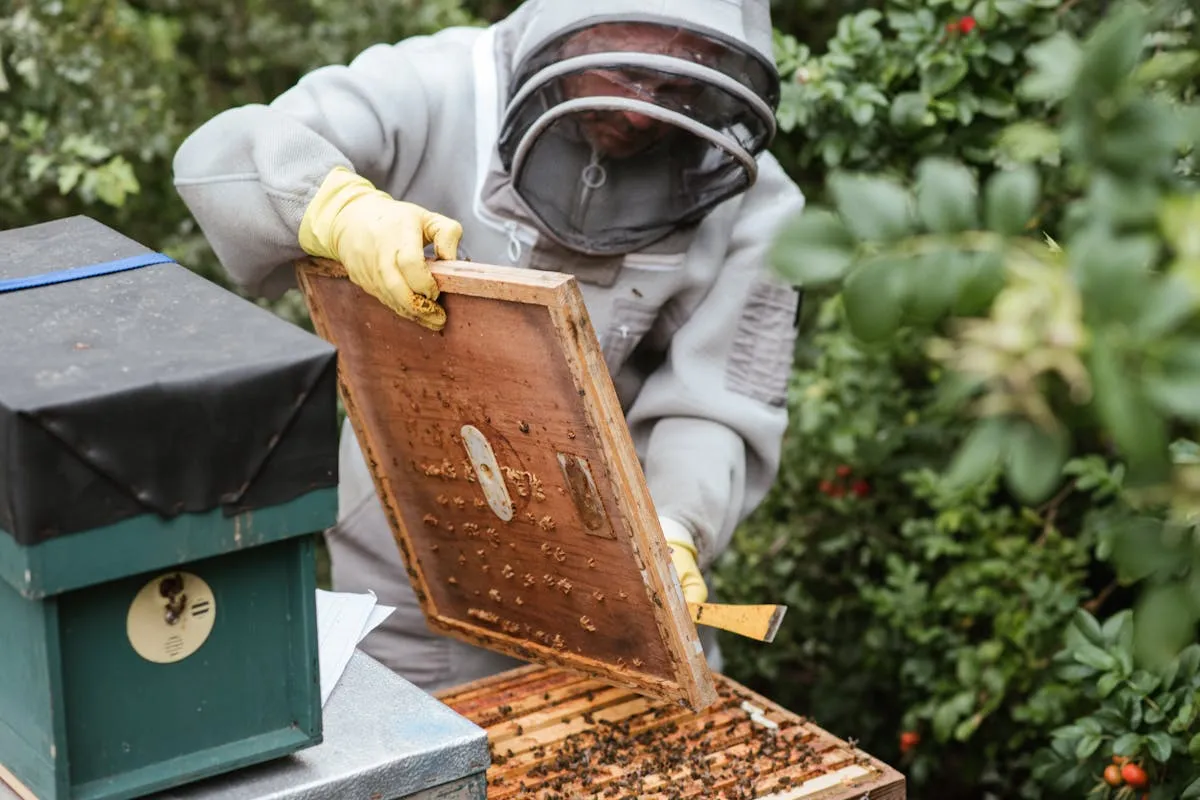
When people ask how many hives we have, the answer right now is six. By the end of this year, we’re planning to double that. But right now, six feels like exactly the right number to learn with.
Each hive has its own character. We’ve learned not to expect any two to behave the same way, even when they’re sitting three feet apart in the same apiary.
The Lineup
Hive 1 is our original — the nuc colony we started with in spring 2024. It came through both winters strong, and it’s still our best hive. You can work it without gloves on a warm day, and they barely notice you’re there. Our package colony didn’t make it through that first winter, so for a while this was the only hive we had. Everything else in the apiary traces back to this colony, one way or another.
Hives 2 and 3 are splits we made from Hive 1 in spring 2025. We waited until the colony was booming, pulled frames of brood and nurse bees, and let them raise their own queens. Both queens mated successfully, and both colonies built up fast through the summer. Hive 2 is productive but lets you know when you’ve overstayed your welcome — we always suit up fully for that one.
Hives 4 and 5 are swarms we caught last summer. Hive 4 showed up in a neighbor’s apple tree in June, and Hive 5 landed on a fence post a few weeks later. The swarm colonies have been the most interesting to watch — their comb patterns are wilder and less predictable than the others. There’s something beautiful about how they organize themselves without the template of foundation wax.
Hive 6 is a package we installed in spring 2025 to add some genetic diversity. Different stock, different temperament. It built up slower than the splits but finished the year looking solid.
Spring Stores and Swarm Signs
Heading into spring, our main focus is making sure each colony has enough stores to get through until the nectar flow starts. In Loudoun County, the first big bloom is usually the fruit trees — apple, pear, cherry — sometime in April, depending on the weather.
We’re also watching for signs of swarming. Strong colonies with young queens sometimes decide they’ve outgrown their home and start making plans to split. It’s a natural behavior, but managing it is one of the skills we’re still developing.
The Plan for Twelve
We want to reach twelve hives this year. Some will come from splits — dividing our strongest colonies and letting them raise new queens. Some may come from catching swarms. Last year taught us that both methods work.
Twelve hives feels like a meaningful step. It’s enough to start producing surplus honey that we can share beyond our immediate circle. It’s also enough that losing a colony or two doesn’t feel devastating.
We’ll document the expansion here as it happens. For now, six hives. We’ll see what the tulip poplars bring.
We sell what the bees don’t need. Interested in trying some? Drop us a line.