- learning
- philosophy
- beekeeping-practice
- community
The Mentor Problem
Beekeeping advice contradicts itself at every turn. How do you learn a craft where the experts disagree about almost everything?
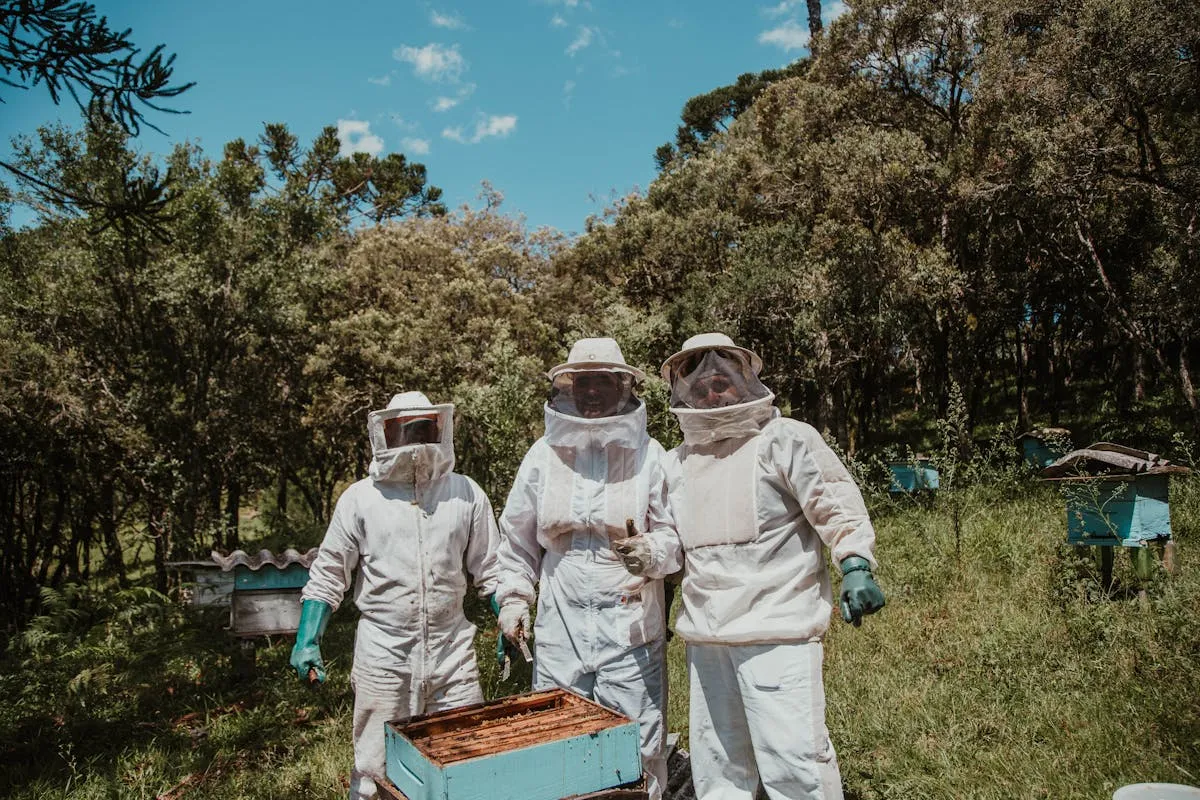
Before we got our first hive, we did what most people do. We read books. We watched videos. We joined a local beekeeping club. We asked questions online. And within about two weeks, we realized that almost nothing anyone told us was consistent with what anyone else told us.
Treat for varroa mites aggressively, or let your bees develop natural resistance. Use foundation wax, or go foundationless. Inspect every seven to ten days, or leave them alone unless you have a specific reason. Feed sugar syrup to new colonies, or never feed — let them forage or die. Use screened bottom boards for ventilation and mite monitoring, or use solid bottoms because the screens chill the cluster in winter.
Every one of these positions had a confident person behind it. Every one of them had a counter-argument from someone equally confident. And all of them claimed the bees as their witness.
This is the mentor problem. Beekeeping is one of the few remaining crafts where oral tradition, published science, and internet tutorials exist in active, unresolved contradiction with each other — and where the stakes of choosing wrong are measured in dead colonies.
The Contradictions
It is worth laying out just how many fundamental questions in beekeeping have no consensus answer. Not edge cases. Not minor details. The foundational questions about how to keep bees alive.
Treatment vs. treatment-free. This is the deepest fault line in modern beekeeping. On one side: varroa destructor is the most serious threat to managed honeybee colonies, and responsible beekeeping requires monitoring mite loads and treating with approved miticides — formic acid, oxalic acid, thymol — when counts exceed threshold. On the other side: chemical treatments create a dependency cycle, weaken the gene pool by propping up bees that cannot survive on their own, and the path forward is to let colonies that cannot manage mites die, selecting over generations for varroa-tolerant genetics. Both sides have data. Both sides have dead bees. Neither side has a controlled, longitudinal study that settles the question for a small-scale beekeeper in the mid-Atlantic.
Foundation vs. foundationless. Commercial beekeepers overwhelmingly use foundation — sheets of embossed beeswax or plastic that guide bees to build uniform comb in a standard cell size. The argument is efficiency: foundation ensures straight comb that fits in an extractor, reduces cross-comb problems, and speeds up colony buildup. Foundationless advocates argue that bees allowed to draw their own comb build cells in the sizes they actually want — which may include smaller cells that some believe reduce varroa reproduction. They also argue that foundation introduces contaminants from recycled commercial wax. We have run both. The foundationless frames are beautiful and the bees seem to prefer them. The foundationless frames are also occasionally crooked, fragile, and difficult to extract. There is no clean answer.
Inspection frequency. One school says inspect every seven to ten days during the active season to catch problems early — queenlessness, swarm cells, disease. Another school says excessive inspection disrupts the hive, breaks propolis seals, crushes bees, and stresses the colony. Both schools are correct. The question is where the line falls, and the answer depends on the beekeeper’s experience, the colony’s strength, the time of year, and dozens of other variables that no rule of thumb can capture.
Feeding. Should you feed a new colony sugar syrup to help it establish? Most beginner resources say yes — a package colony has no drawn comb, no stores, and no foragers familiar with the local landscape. Syrup gives them resources to build with while they get oriented. But some beekeepers argue that feeding syrup produces inferior comb, attracts robbers, and masks the question of whether a colony is viable in its location. They would rather lose a weak colony in its first season than prop it up with sugar.
Screened vs. solid bottom boards. Screened bottom boards were promoted for years as a varroa management tool — mites that fall off bees drop through the screen and out of the hive instead of climbing back onto a host. The evidence for this as a meaningful mite control method has not held up well. But screened bottoms also provide ventilation, which may help with moisture management. Or they may chill the cluster in winter. It depends on your climate, your hive configuration, and who you ask.
These are not trivial disagreements. Each one represents a decision that affects whether your bees survive. And the honest answer to most of them is: it depends on things we cannot fully specify.
The Mentor Tradition
Beekeeping has always been taught person to person. You learn from someone who has done it longer than you, who shows you how to light a smoker, how to hold a frame, how to spot a queen, how to read brood pattern. The mentor tradition is real and valuable. Some of the most useful things we have learned came from standing next to someone at an open hive while they pointed at a frame and said, “See that? That is what laying workers look like.”
There is no substitute for that kind of situated knowledge. You cannot learn to read a frame of brood from a book. You can look at pictures, but the scale is wrong, the light is wrong, and you cannot smell the hive. You need someone to show you, in person, in real time, what healthy brood looks like so that when you see unhealthy brood you recognize the difference. Beekeeping clubs serve this function, and the Loudoun County Beekeepers Association — where we are members — takes it seriously. Mentors pair with new beekeepers. Experienced members open their hives for teaching days. The generosity of people who will spend a Saturday afternoon showing you their bees is one of the genuinely good things about the beekeeping community.
But the mentor tradition carries a structural problem that nobody talks about much: authority in beekeeping is conferred by years, not by rigor. If someone has kept bees for thirty years, their opinion carries weight in a room. That weight is often deserved — thirty years of observation teaches things that no study can. But it is sometimes unearned, because experience and understanding are not the same thing.
When Experience Misleads
Here is the difficult part. A beekeeper who has kept bees for forty years and never treated for varroa may tell you that treatment is unnecessary. Their bees survived. The evidence is right there, buzzing in the backyard. How do you argue with that?
The problem is survivorship bias. You are hearing from the person whose bees lived. You are not hearing from the dozens of beekeepers whose untreated colonies died over those same decades and who quietly stopped keeping bees. The survivor’s story is vivid and personal and standing in front of you. The failures are invisible — people who lost their colonies, blamed themselves, and moved on.
There is another layer to this. A beekeeper’s colonies can survive despite their methods, not because of them. If you keep bees in a region with a large feral population, your queens may be mating with feral drones that carry varroa-tolerant genetics — genetics your management had nothing to do with. If your apiary is isolated enough that mite reinfestation pressure is low, your colonies may stay below crisis thresholds even without treatment. If you are in a climate where winters are short and buildup starts early, your bees may outrun their mites through sheer reproductive speed. None of these factors are things the beekeeper controlled, but all of them can be misattributed to the beekeeper’s philosophy.
This is not a critique of any particular person. It is a structural problem with learning from experience in a system as complex as a beehive. The number of variables is enormous — genetics, climate, forage, mite pressure, neighboring apiaries, soil, water, pesticide exposure, queen quality, comb age — and they interact in ways that make it genuinely difficult to know why a colony survived or why it died. When a mentor says “I have done it this way for thirty years and it works,” they are telling you something real. But what they are telling you may not be what they think they are telling you.
The Research Gap
You might expect published science to settle these debates. It does not, and the reason is both simple and frustrating: there is remarkably little rigorous, controlled research on many common beekeeping practices.
Varroa biology and treatment efficacy are reasonably well-studied — this is where the agricultural research funding goes, because pollination services are a multi-billion-dollar industry and colony losses threaten food production. If you want to know the LD50 of oxalic acid on varroa mites, someone has measured it.
But if you want to know whether foundationless comb reduces mite reproduction in a temperate climate, or whether screened bottom boards measurably improve overwinter survival, or whether the optimal inspection frequency for a hobbyist apiary is seven days or fourteen — the data gets thin. Most studies use sample sizes too small to generalize. Many are conducted in climates or management systems that bear no resemblance to a backyard operation in Virginia. The leap from “a study in Florida with Africanized bees showed X” to “therefore you should do X in Loudoun County with Carniolans” is wider than it appears.
Beekeeping is not alone in this. Many traditional crafts and agricultural practices suffer from the same gap between confidence and evidence. The difference is that in beekeeping, the organisms you are managing are alive, complex, and capable of dying in ways that look the same whether you did everything right or everything wrong. A colony that starves in March looks the same regardless of whether it was managed by a twenty-year veteran or a first-year beginner. The dead bees do not carry footnotes.
What this means in practice is that much of what passes for beekeeping knowledge is anecdotal. “I did X and my bees survived” is the dominant form of evidence. It is not nothing — accumulated anecdotal observation is how traditional knowledge works, and traditional knowledge kept bees alive for millennia before anyone designed a controlled study. But it is also not the same as knowing, in the rigorous sense, that X caused the outcome. The humility required to hold that distinction is rare in any field. It is especially rare in one where your animals’ lives are at stake and the pressure to have answers is constant.
Regional Variation
Even when good research exists, it often cannot travel. Beekeeping is radically local.
What works in south Georgia does not work in Loudoun County. Georgia beekeepers can split colonies in February because their buildup starts in January. We cannot — our bees are still clustered, and the maples have not even thought about blooming. A beekeeping practice calibrated for the Gulf Coast, where nectar flows nearly year-round and winters barely register, is not transferable to Zone 7a, where colonies need sixty to eighty pounds of stores to survive from November through the first pollen in late March.
The variation does not have to be that dramatic. Even within Virginia, the Shenandoah Valley has different forage, different flow timing, and different winter conditions than the Piedmont east of the Blue Ridge. A beekeeper in Winchester, fifty miles from us, faces earlier cold snaps, heavier snow, and different dominant nectar sources. Their management calendar is not the same as ours.
This makes universal beekeeping advice suspect by nature. When someone writes a book or posts a video saying “Do X in April,” the first question should be: where? What USDA zone? What altitude? What are the dominant nectar sources? When does the spring flow start? When does it end? A beekeeping tip without a location is like a planting guide without a climate — it might apply to you, or it might kill your plants.
The best regional knowledge comes from local beekeepers and local clubs. This is one of the things the Loudoun County Beekeepers Association does well — the advice you get at a meeting is calibrated to this place, these trees, this weather. When someone says “start your mite treatments by the first week of August,” they mean here, where the goldenrod flow tails off in September and the winter bees start developing in October. That specificity is worth more than a nationally published timeline.
YouTube and the Confidence Problem
The internet has made beekeeping knowledge more accessible than at any point in history. It has also made it more confusing.
YouTube, in particular, has created a class of beekeeping influencer — charismatic people with large followings, strong opinions, and production values that lend authority to whatever they say. Some of them are excellent. Some of them are experienced beekeepers sharing genuinely useful information from their specific context. Some of them are people who have been keeping bees for three years and have figured out that confidence plus a camera equals an audience.
The problem is not that these creators are wrong. Some are, but most are sharing what works for them in their climate, with their bees, at their scale. The problem is the medium. Video rewards confidence. It rewards certainty. It rewards someone looking into the camera and saying “This is what you should do” — not someone saying “This is what I tried, I am not sure it was the right call, here are the variables I cannot control, and your situation may be different.”
Hedging does not perform well. A ten-minute video titled “Why I Stopped Treating for Varroa” will get ten times the views of a thirty-minute video titled “The Complex Tradeoffs in Varroa Management Decisions for Small-Scale Beekeepers in Temperate Climates.” The algorithm selects for conviction, and conviction without context is how bad advice scales.
We still watch beekeeping YouTube. There are channels we trust — people who show their failures, who cite their sources, who say “I do not know” when they do not know. But we have learned to watch with a specific filter: Is this person telling me what to think, or showing me how they think? The first is prescriptive. The second is useful.
The Loudoun County Beekeepers Association
We joined the Loudoun County Beekeepers Association before we got our first hive, and it remains one of the more valuable things in our beekeeping life. It is also one of the more confounding.
Picture a room of about sixty people on a weeknight in Leesburg. The topic is winter preparation. The speaker — a respected local beekeeper with fifteen years of experience — recommends wrapping hives with tar paper for insulation and reducing the entrance to a single bee-width opening. Reasonable advice, backed by experience.
Then the questions start.
Someone in the back row, also with fifteen years of experience, says they never wrap and their bees do fine. Someone else says they wrap but leave the entrance wide open for ventilation. A third person inserts a moisture quilt on top and argues that moisture, not cold, is what kills winter colonies — so insulation is secondary to ventilation. A fourth person runs top-bar hives and says the whole conversation is irrelevant to their setup.
Nobody is wrong, exactly. They are all reporting real outcomes from their real apiaries. But the new beekeeper sitting in the front row — the one who came tonight specifically to learn what to do with their hives before November — leaves with four conflicting recommendations and no way to evaluate which one applies to their situation, their hive type, their specific microclimate.
We have been that new beekeeper. We have sat in that chair. And the thing we have come to appreciate about the LCBA is not that it provides clear answers — it does not — but that it provides the full landscape of disagreement. You hear the arguments. You hear the counter-arguments. You learn which questions are settled (treat for American foulbrood immediately, no debate) and which questions are genuinely open (how much ventilation does a wintering colony need in Zone 7a). The disagreement itself is informative, if you are willing to sit with it.
The club also provides something no book or video can: accountability over time. The beekeeper who recommended wrapping with tar paper — you see them again in March. You can ask how their colonies came through. If they lost two out of six, that is information. If the beekeeper who never wraps lost zero out of eight, that is also information. Over several seasons, patterns emerge. Not certainty — patterns. And patterns are the best you can get in a craft this variable.
What We Have Settled On
After two years, here is how we navigate the contradictions. It is not a system, exactly. It is more like a set of habits.
Read the studies. When a question matters — varroa treatment thresholds, feeding protocols, disease identification — we look for published research first. Not forums, not YouTube, not someone’s blog. Peer-reviewed research, ideally with sample sizes large enough to mean something and conducted in a climate at least roughly similar to ours. The Bee Informed Partnership’s annual loss surveys, the USDA-ARS research, the Journal of Apicultural Research — these are our first stops. The research does not answer every question, but it narrows the range of reasonable positions.
Listen to the mentors, but weigh their context. When an experienced beekeeper gives us advice, we try to understand the conditions under which that advice was formed. How many hives do they run? Where? What race of bees? What is their mite management protocol? A beekeeper running fifty hives in the Shenandoah Valley with Russian bees and an aggressive treatment schedule is operating in a different universe than we are with six hives of Carniolans outside Leesburg. Their advice might still apply. But we need to do the translation ourselves.
Try things on a small scale. When we want to test a practice — foundationless frames, a new mite treatment timing, a different feeding approach — we try it on one or two hives, not all six. If it works, we expand. If it does not, we have lost a frame or a season in one hive, not the whole apiary. This is the closest thing to a controlled experiment that a backyard beekeeper can run, and it has saved us from scaling mistakes we would have regretted.
Observe the bees. This is the part that sounds simple and is not. The bees do not read the forums. They do not care about our philosophy. They respond to their environment — the forage, the weather, the mite load, the queen’s pheromone, the condition of the comb. When our management decision conflicts with what the bees are doing, we have learned — slowly, and sometimes painfully — to trust the bees. If they are building comb in a direction we did not plan for, there may be a reason. If they are ignoring the sugar syrup we put in the feeder, they may not need it. If they are bearding on the front of the hive, they are probably not preparing to swarm — they are probably hot. The bees are always responding to information we do not have.
Hold opinions loosely. We have positions on most of the questions listed at the top of this post. We treat for varroa. We use mostly foundation with some foundationless experiments. We inspect roughly every two weeks during the active season. We feed new colonies. We use solid bottom boards. But we hold all of these positions provisionally. If our mite counts stay low for three consecutive seasons, maybe we extend the treatment interval. If our foundationless frames consistently produce stronger brood, maybe we switch. Every position is a working hypothesis, not a conviction.
The Bees as the Ultimate Mentor
There is a passage in Thomas Seeley’s The Lives of Bees where he describes feral colonies living in tree cavities — colonies with no beekeeper, no treatments, no inspections, no management at all. Some of these colonies survive for years, managing their own mite loads through behaviors that scientists are only beginning to understand. Hygienic behavior, grooming, brood breaks during swarming, small nest cavities that limit population — the bees have mechanisms that predate human beekeeping by millions of years.
This does not mean we should leave our managed colonies alone and hope for the best. Managed bees face pressures that feral bees do not — higher colony densities, less genetic diversity, exposure to agricultural pesticides, migratory stress. The comparison is not direct.
But it does suggest something about the limits of mentorship, including our own. The bees have been solving the problem of survival for far longer than anyone has been keeping them in boxes. When we stand at the hive and watch — when we spend those first fifteen minutes just observing before we reach for the hive tool — we are consulting the longest-running experiment in beekeeping. The bees have been iterating on their design for thirty million years.
The beekeeper who is certain — who has resolved every question and never doubts their approach — is not paying attention. The questions are genuinely hard. The variables are genuinely complex. And the bees are genuinely doing things we do not understand.
We think the right posture is the one we try to hold at every inspection: curious, attentive, willing to be wrong, and quiet enough to notice what the bees are saying. The mentors help. The research helps. The club helps. But the bees are the primary source.
They have always been the primary source.
References:
- Seeley, Thomas D. The Lives of Bees: The Untold Story of the Honey Bee in the Wild. Princeton University Press, 2019 — feral colony survival, natural varroa management behaviors
- Seeley, Thomas D. Honeybee Democracy. Princeton University Press, 2010 — collective decision-making, swarm intelligence
- Bee Informed Partnership, annual colony loss surveys (beeinformed.org) — national loss data, management practice correlations
- Dietemann, Vincent et al. “Varroa destructor: research avenues towards sustainable control.” Journal of Apicultural Research, 2012 — treatment efficacy and resistance
- Berry, J.A., Owens, W.B., and Delaplane, K.S. “Small-cell comb foundation does not impede Varroa mite population growth in honey bee colonies.” Apidologie 41, no. 1 (2010): 40—44 — foundationless/small-cell claims examined
- Virginia Cooperative Extension, “A Beekeeper’s Year in a Virginia Apiary” — regional management calendar for Zone 7a
We sell what the bees don’t need. Interested in trying some? Drop us a line.