- honey
- tulip-poplar
- forage
- harvest
Tulip Poplar Honey
The tree most people walk under without noticing produces one of the most distinctive honeys in the eastern United States.
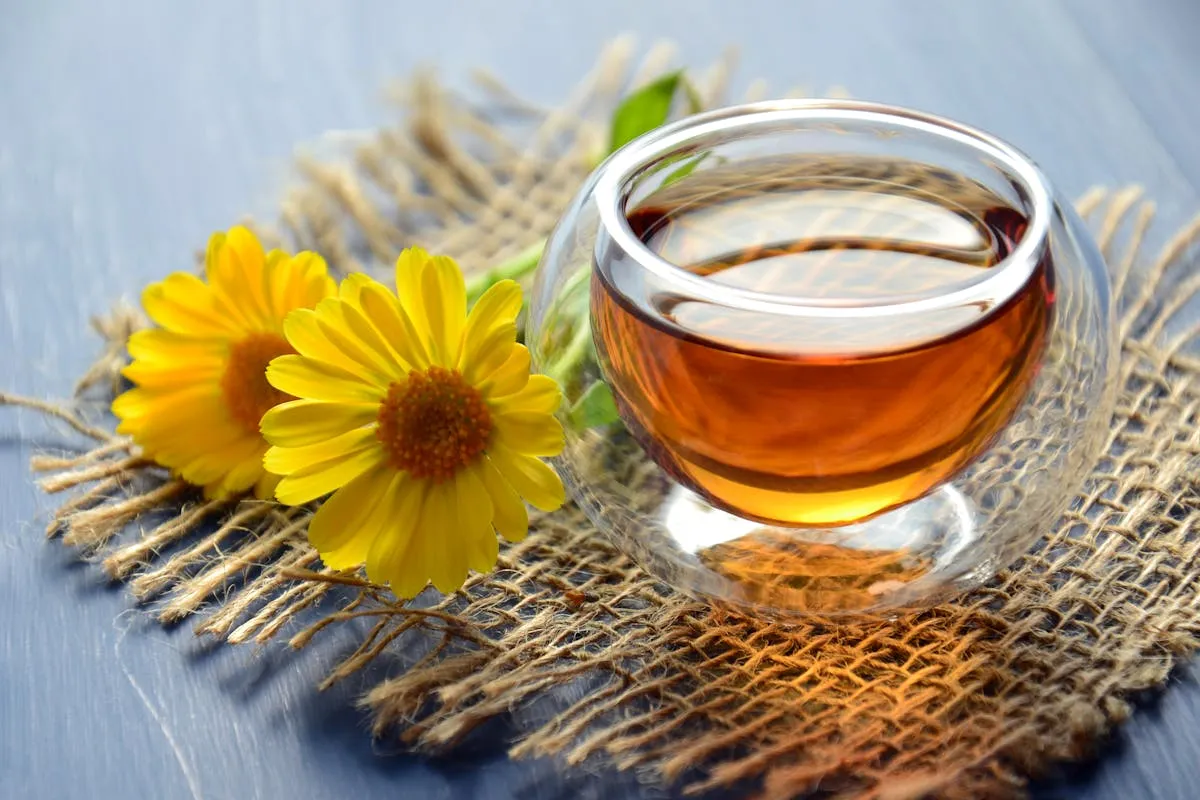
If you live in the eastern United States, you have almost certainly walked under a tulip poplar. They are among the tallest native hardwoods on the continent — a hundred feet or more, with straight trunks that don’t branch until well above the canopy line. They grow in every county in Virginia. There are probably several within a mile of where you are sitting right now.
What most people do not know is that tulip poplars bloom. The flowers are large — two to three inches across, greenish-yellow with orange bases, shaped like tulips. But they open eighty or a hundred feet up, where they blend into the canopy and disappear. You could live next to one your entire life and never notice. The first sign is usually petals on the ground, and by then the bloom is nearly over.
Beekeepers notice. When the poplars open in late spring, they produce nectar in quantities that are hard to overstate.
The Nectar
Each tulip poplar flower holds roughly a tablespoon of nectar — pooled visibly in the cup-shaped base, enough that you can see it glinting if you look into a low-hanging flower. This is among the highest nectar yields per bloom of any plant on the continent. A single mature tree can produce nine pounds of nectar in a season.
During a good flow, the nectar is so abundant that it drips. Stand under a blooming tulip poplar on a still day and you may feel a fine, sticky mist. It coats the leaves below. It spots car windshields. It is the reason you sometimes see what looks like sap all over everything in May — though it is not sap at all. It is nectar, falling from flowers you cannot see.
For our bees, this is the event of the year. In Loudoun County, the tulip poplar flow typically runs from late April through early June, peaking in mid-May. During those weeks, a strong colony can fill two or three supers — sixty to a hundred pounds of honey. The bees work the flowers from first light until dark. You can hear the hum from the ground.
The flow is weather-dependent and not guaranteed. Late frosts can damage the buds. Drought reduces nectar production. A week of rain during peak bloom means the bees cannot fly, and nectar washes from the flowers before they can collect it. In a bad year, the poplar crop is thin. In a good year, it is extraordinary.
The Honey
Tulip poplar honey is dark amber — noticeably darker than clover, darker than most wildflower blends, though not quite as dark as buckwheat. If you hold a jar up to the light, it glows deep reddish-brown. The color alone tells you this is not grocery store honey.
Dark honeys are typically bold, and tulip poplar is no exception — but it is milder than you would expect from the color. The taste has been compared to fig jam, dried cherries, and dates, with a slight molasses quality that never turns heavy. There is a crisp finish that cuts through the richness. It is complex without being aggressive.
Tulip poplar honey resists crystallization far longer than lighter honeys. The high fructose-to-glucose ratio and elevated maltose content keep it liquid for months. If you are used to clover honey turning grainy on the shelf after a few weeks, poplar honey is a different experience.
For people interested in the health angle: darker honeys consistently show higher antioxidant content than lighter varieties. Tulip poplar’s deep color suggests it is no exception, though we would not oversell that — eat it because it tastes good.
Where It Sits Among American Varietals
Honey varietals are a regional thing. Sourwood is the crown jewel of Appalachian honey — light amber, complex, and rare enough to command premium prices. Tupelo, from the swamps of Florida and Georgia, is famous for never crystallizing and has a devoted following. Orange blossom from Florida and California is probably the most recognized named varietal in the country.
Tulip poplar occupies a quieter spot. It is well known among beekeepers in the mid-Atlantic and Appalachian regions — anyone who has kept bees from Virginia to Kentucky to Tennessee knows the poplar flow — but it has less name recognition with the general public. It is not sold at most grocery stores. You find it at farm stands, from local beekeepers, and through specialty retailers.
Part of the reason is practical. To produce a clean tulip poplar varietal, you need to pull any earlier honey (from locust, orchard blooms, clover) before the poplar flow begins, then extract the poplar honey before the next major nectar source dilutes it. Many beekeepers skip this step and let the poplar blend into their summer wildflower crop. The result is that a lot of tulip poplar honey gets sold as wildflower without anyone calling it out by name.
The other reason is that tulip poplar has historically been considered a baking honey — too dark and strong for the table, in an era when light, mild honey was the standard. That perception is changing. People who seek out single-origin coffee, farmstead cheese, and small-batch spirits tend to appreciate a honey with character. Tulip poplar has character.
Why We Built Our Apiary Around Tulip Poplars
Our apiary sits in a stand of mature tulip poplars. They are the dominant trees on our property, and when they bloom, they are the dominant nectar source for miles around. Our honey is not a monofloral tulip poplar — we do not pull supers between every bloom — but the poplar is the backbone. It is what gives our late spring and summer honey its dark color, its depth, and its particular flavor.
If you have had our honey and wondered why it does not taste like the light golden honey from the store, this is why. Our bees are working hundred-foot tulip poplars that produce nectar in tablespoon-sized pools, and the honey they make from it is dark, rich, and specific to this piece of Loudoun County.
The tree is worth knowing about even if you never taste the honey. Tulip poplars are not actually poplars — they are in the magnolia family. The genus name, Liriodendron, means “lily tree.” They are one of the oldest flowering tree lineages on Earth, with fossil records dating back millions of years. They can live two hundred years and grow over a hundred and sixty feet tall in Appalachian cove forests.
Further reading:
- Spivak, M. and Danka, R. — nectar production in Liriodendron tulipifera, pollinator ecology research
- USDA Farmers’ Bulletin (1922), “Beekeeping in the Tulip Tree Region” — historical recognition of tulip poplar as a foundational honey plant in the eastern US
- Virginia Cooperative Extension, “A Beekeeper’s Year in a Virginia Apiary” — seasonal nectar flow timing for Virginia
- Backyard Ecology, “Tulip Poplars: A Source of Abundant Nectar and Pollen” — overview of nectar production and pollinator significance
We sell what the bees don’t need. Interested in trying some? Drop us a line.